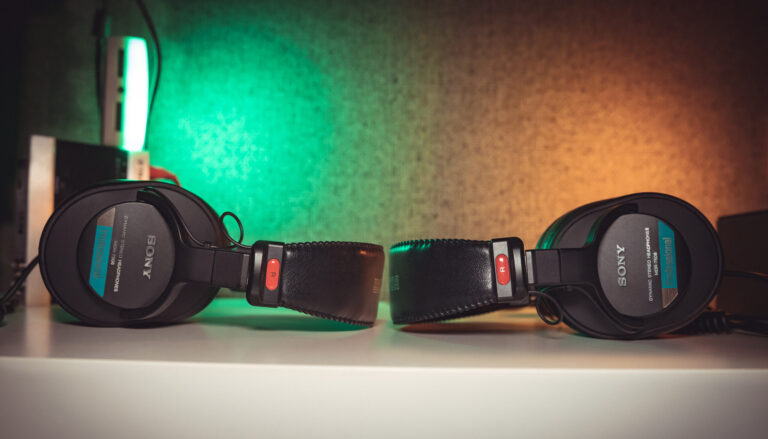
SONY MDR-7506. Why Studios Trust These Headphones After All These Years?

The year is 2026. Wireless technology has reached its peak, AI is already composing music, manufacturers are competing over Bluetooth codecs support, and every new pair of headphones claims to deliver “the most advanced sound on the market. And yet, there’s a headphone model that seems completely untouched by time.
The Sony MDR-7506 was released back in 1991 and they’ve remained virtually unchanged ever since. The same design, the same cable, the same construction. In a world where devices become obsolete within three to four years, that seems almost like an anomaly.
By the way, if you’re interested, there’s a detailed review of 7506 on the channel. In this video, we’ll look at why they’re so we ll regarded and whether they’re still relevant in 2026.
Why professionals love SONY MDR-7506?
The Sony MDR-7506 isn’t loved for sounding “beautiful”. They’re valued for sounding honest. These are not lifestyle headphones – they’re a professional tool. You can depend on them and they are built to withstand years of heavy use. Yes, the ear pads typically need replacement after 1 or 2 years of regular use, but that’s simply the nature of professional equipment and its consumables.
In terms of sound, they offer a detailed and well-defined midrange, clear highs, and strong overall resolution. You can hear recording mistakes, background noise, and distortion – exactly what matters when you’re working with audio. And being wired, they provide an immediate response with no latency, which is essential for recording, editing, mixing, and monitoring.
Another key strength is predictability. The tuning of the 7506 is quite distinctive, and once you become familiar with it, you’ll have a reliable reference point and you’ll know how your voice or mix is likely to translate across other systems.
Another advantage is their affordability within the professional segment. For what they offer, they remain relatively inexpensive – especially considering they’re a studio tool.
And importantly, they don’t try to be good at everything. They do one job and they do it consistently well.
SONY MDR-7506 mods
Now, before we move on, I want to quickly talk about 7506 mods. People change the cables, add damping, customize the look, all kinds of stuff. But honestly, out of all the mods available, there’s really only one that I personally think is worth paying attention to, and that’s swapping the ear pads.
The stock ear pads are fine at first, but during longer listening or editing sessions they start to become uncomfortable, at least for me. After a couple of hours, I could definitely feel the pressure and heat building up, so eventually I switched over to a pair of sheepskin ear pads instead. And I have to say, in terms of comfort, the difference is huge.
Now, the important thing here is that ear pad swaps do affect the sound, and that’s something you should always keep in mind with headphones. But thankfully, in this case, the change isn’t dramatic. The overall character of the MDR-7506 is still there, and most importantly, I can still clearly monitor the midrange, which is really the whole reason I use these headphones in the first place. So for me, it’s basically the best tradeoff possible: massively improved comfort without losing the core sound signature that makes these headphones so useful.
Who should buy MDR-7506 in 2026?
I’d say, sound engineers, musicians, and producers (particularly for recording and basic mixing). Video editors and filmmakers who need to monitor audio tracks. Streamers, podcasters, and YouTubers for checking microphone levels and sound balance. On-set sound technicians working on interviews and location shoots. Radio presenters, audio students and educators, voice-over artists, and sound designers. They’re also useful for anyone involved in analogue-to-digital conversion and audio restoration.
They can even appeal to audiophiles who value analytical sound and also to anyone curious about how their favorite recording truly sounds including any flaws or recording mistakes it may contain.
The Sony MDR-7506 is not a universal solution. And they’re definitely not a trendy gadget. They’re something else entirely – a tool from another era that has outlived countless trends.
And that’s exactly why they remain relevant. Because as technology becomes more complex, simple and reliable audio tools only grow in value.
And that’s all from me for today. If you enjoyed this video, please give it a like, and if you’d like to see more content like this, consider subscribing to the channel. I’ll see you in the next video. Goodbye!