OMNITRONIC TRM-202 MK3 Rotary DJ Mixer Review

The OMNITRONIC TRM-202 MK3 is a rotary mixer that’s been quietly gaining attention among DJs (myself included) who are curious about that classic analogue workflow. What makes it especially interesting is that it doubles as a fantastic entry point into the world of rotary mixers.
Unboxing
The mixer comes in a medium sized box. Besides the mixer you also get a power cord and a user manual.
Right out of the box, the mixer feels solid. It has a full metal chassis and comes at 3.7kg. THe mixer is 19 centimeters wide, 10 centimeters high and 24 centimeters deep. The mixer also features Alps RK27 “Blue Velvet” potentiometers for channel volume controls and isolator EQ.
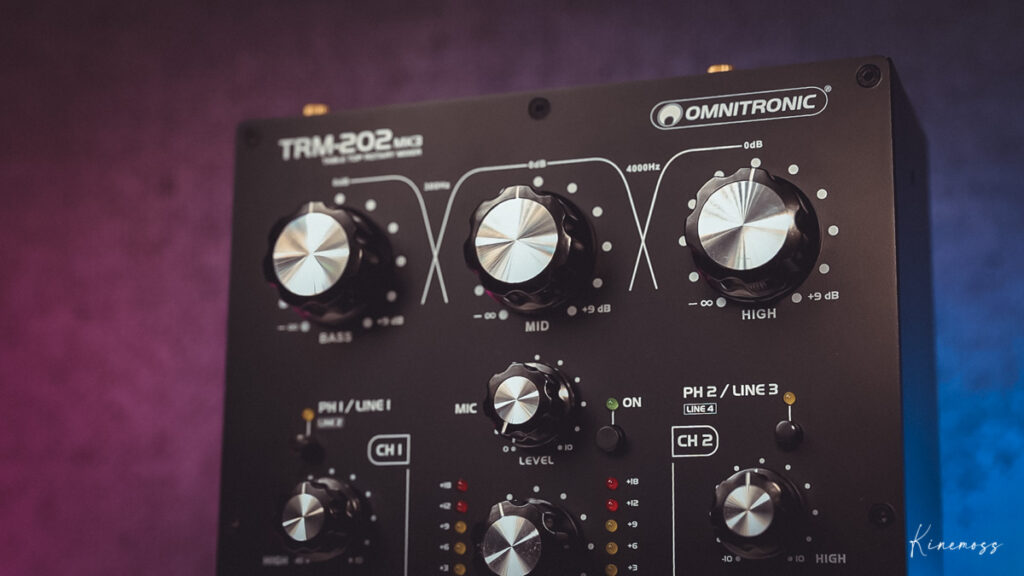
The RK27 “Blue Velvet” is a high-end dual-unit stereo volume control potentiometer manufactured by Japanese Alps Corporation and is specifically designed for top-class audio amplifiers and mixers.
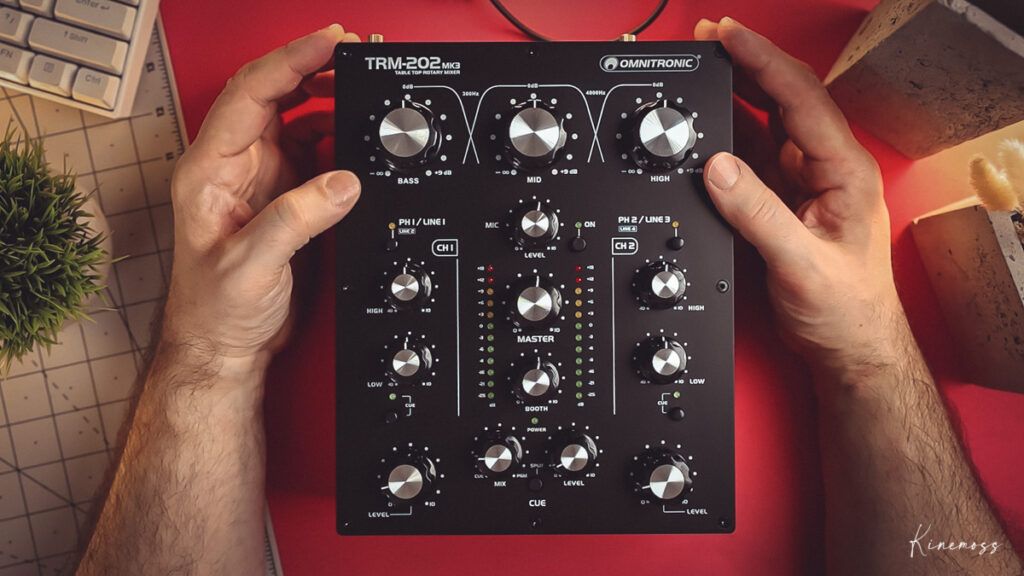
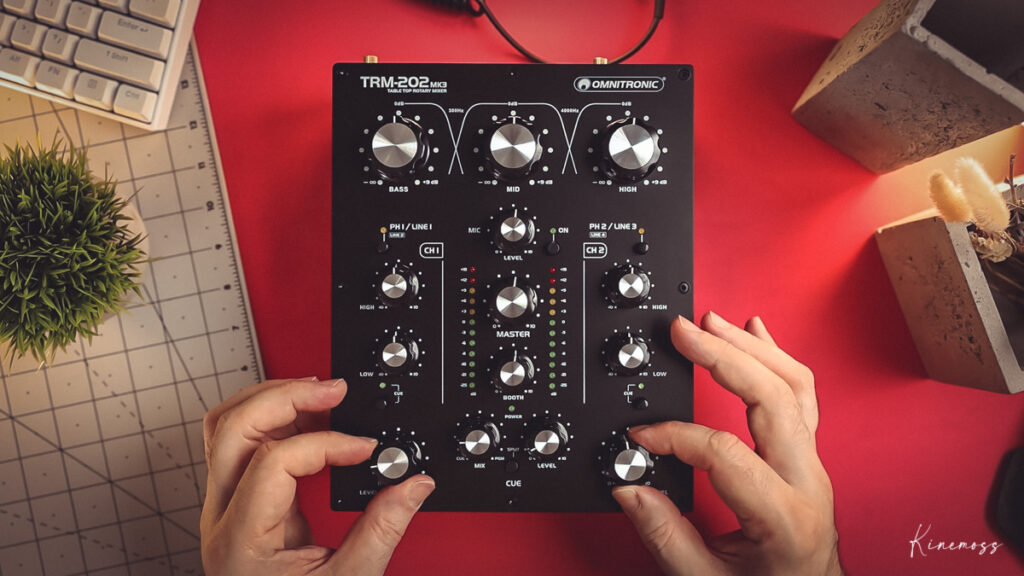
The top panel of the Omnitronic TRM-202 MK3 is clean and has a classic rotary design.
Starting on the left, we have Channel 1 controls – a large rotary volume knob, a cue button, two-band EQ, and a phono/line switch. While some may say 2-band EQ is not enough,the addition of a three-band master isolator totally compensates it, offering precise and expressive control over the overall mix and we will get back to it in a moment.
In the center, there is a small green power indicator. Then we have a cue control section where you can blend the headphone signal between Cue and PGM, control the headphones output volume. And in addition the mixer also has a split cue feature and that was a very pleasant surprise.
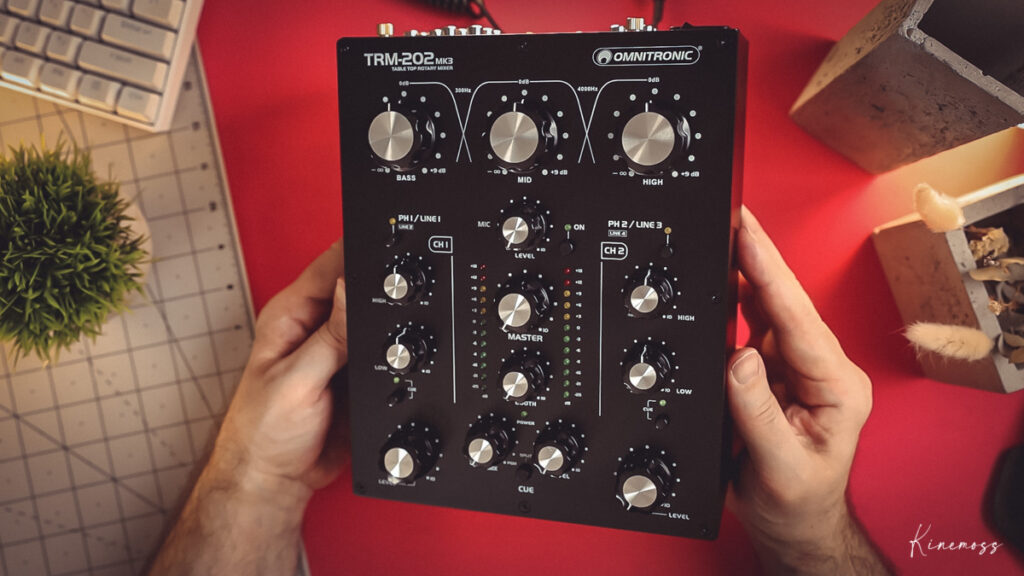
Above that section there are independent volume adjustments for master and booth outputs. As well as a LED level meter. Just above the master volume, there’s also a dedicated microphone level control and a microphone on/off switch.
On the right-hand side, we have Channel 2 with its own volume control, a cue button, two-band EQ, and a phono/line switch.
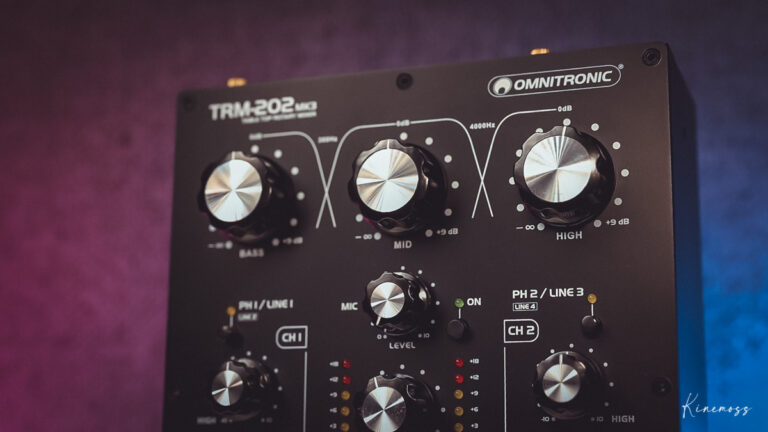
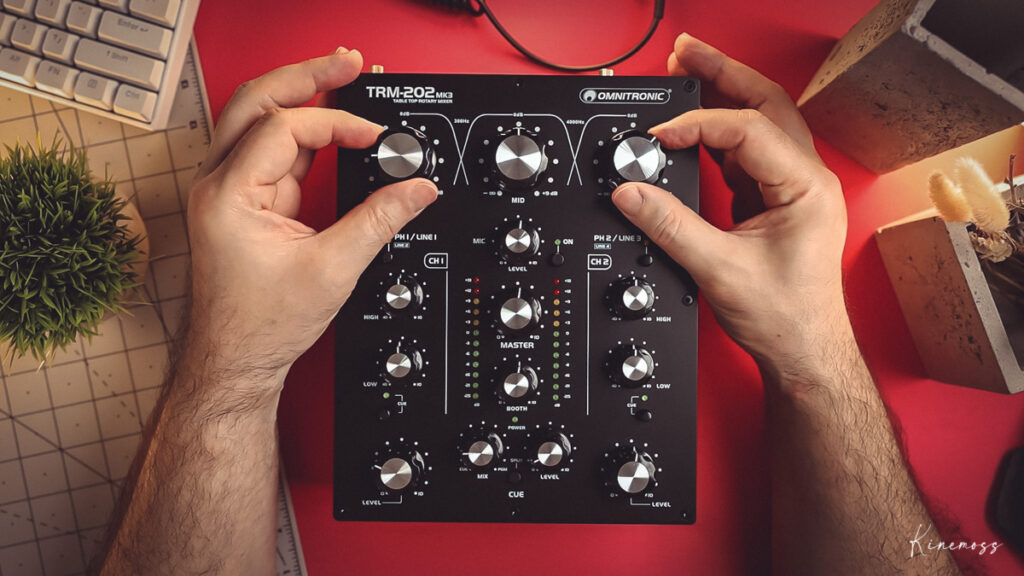
On top of the Omnitronic TRM-202 MK3 there is a three-band isolator EQ with large knobs. They are smooth, precise, and weighted with just the right amount of resistance. The isolator EQ can do a full cut or provide up to +9 dB of gain per band, with crossover points set at 300 Hz and 4 kHz.
If you’ve never used an isolator EQ before, you’re in for something genuinely exciting. Unlike a standard EQ, which only shapes frequencies, the isolator also allows you to completely remove low, mid, or high frequencies with a single turn.
The switches on the mixer have a firm and satisfying tactile click. While this isn’t a boutique, high-end mixer, it exceeded my expectations in terms of build quality and physical feel.
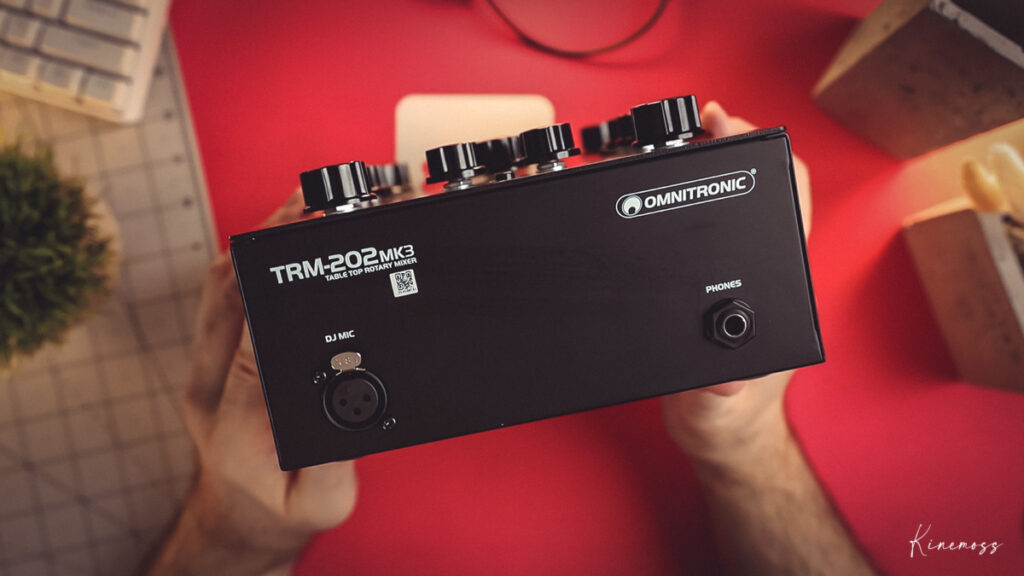
On the front panel of the mixer, there is an XLR microphone input and a 6.3 mm headphone output.
Although the headphone output power is not specified, the mixer had no problems driving demanding headphones such as the 300-ohm Sennheiser HD 6XX, the 120-ohm AKG K710, and the 300-ohm SIVGA SV023.
Of course these are not DJ headphones and for reference, my Sennheiser HD25 is rated at just 70 ohms. I therefore used higher-impedance models specifically to better test the headphone output’s capability.
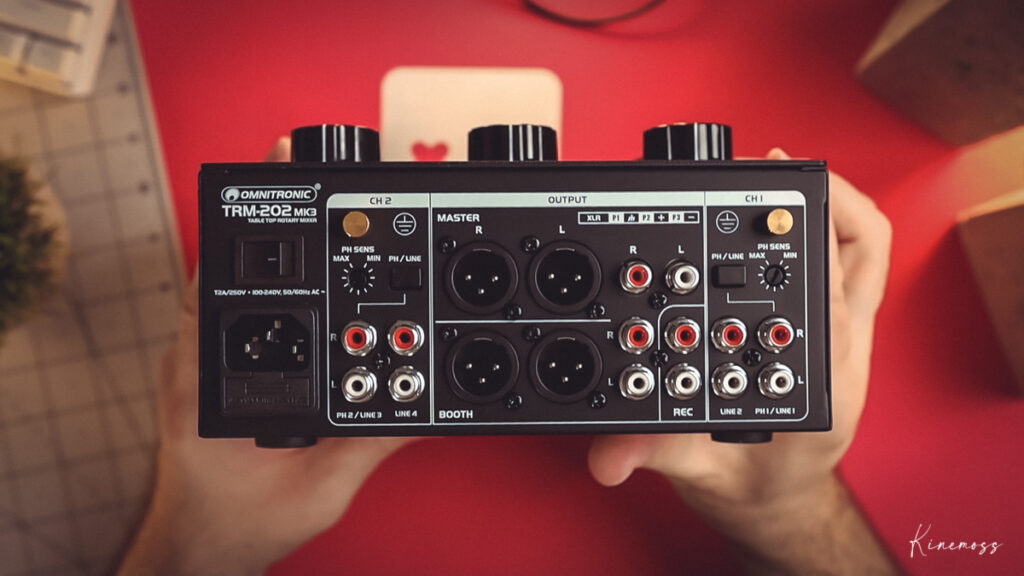
The back of the Omnitronic TRM-202 MK3 and its layout is equally straightforward. Starting from the left, there’s the power switch and a power socket. The mixer has a universal power supply making it suitable for use worldwide.
Next are the Channel 2 inputs, with both phono and line RCA connections, a phono sensitivity attenuator, grounding terminal, and a line/phono selector switch.
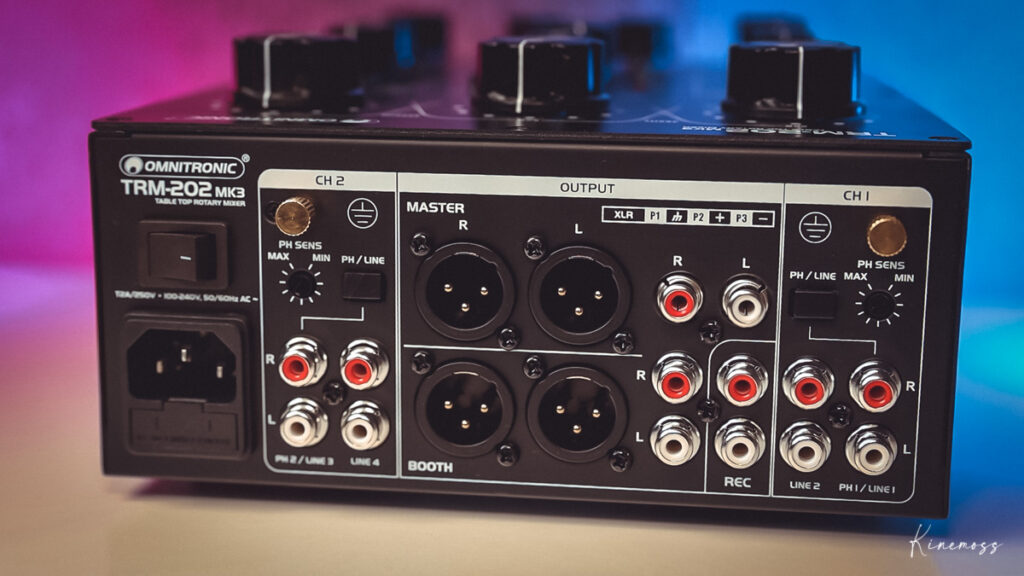
This is followed by the master and booth outputs, available in both XLR and RCA, as well as an additional RCA for record output.
Finally, on the right, Channel 1 inputs mirror Channel 2 with the same set of connections and controls: phono and line RCA inputs, a phono sensitivity attenuator, grounding terminal, and line/phono switch.
Finding this review interesting? Read more audio gear reviews here
The rotary experience
If you’ve never used a rotary mixer before, the biggest shift is this: you stop thinking in terms of quick cuts and start thinking in terms of blending.
Instead of line faders, you’re using rotary knobs for volume. That alone changes your approach. You naturally make slower, more gradual transitions.
OMNITRONIC TRM-202 MK3 subjective sound impressions
If you regularly watch my channel then you know that I love talking about sound.
One of the biggest reasons people love rotary mixers is the sound – and the Omnitronic TRM-202 MK3 is no exception here. It delivers a surprisingly warm analogue character for its price.
There’s a subtle richness to the audio. The signal is not overly colored, but it’s definitely not sterile. Tracks feel a bit more “alive,” especially when you’re layering them properly.
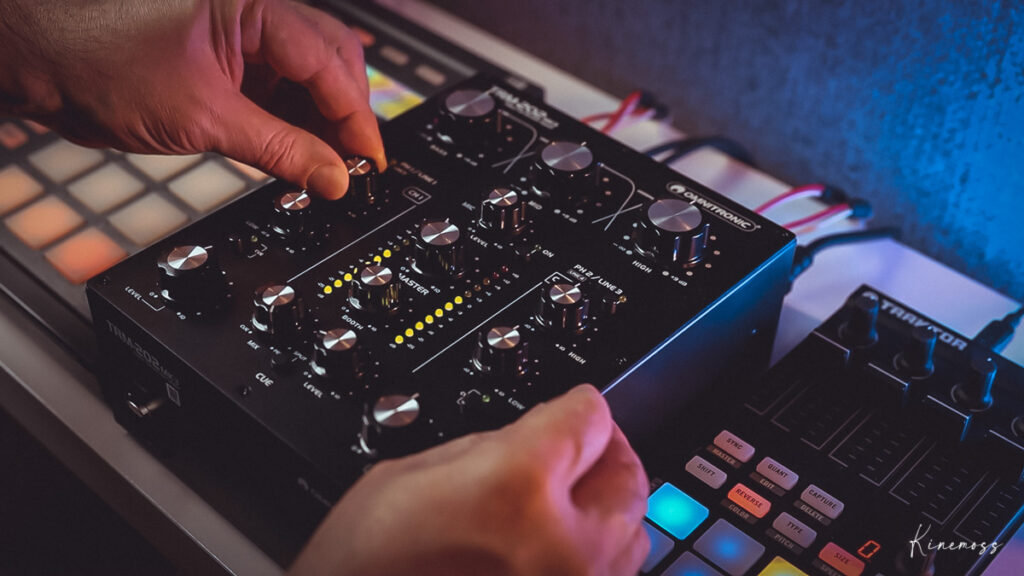
The isolator section is another highlight. It’s powerful and musical, allowing you to sculpt the mix in a very expressive way.
This is where that “mixing with your ears” philosophy really shines. Because you are shaping the sound in real time, reacting to what you hear rather than what you see.
Accessibility
Now let’s talk about accessibility.
High-end rotary mixers can easily cost thousands Dollars or Euros. That makes them intimidating if you’re just curious about the format. The Omnitronic TRM-202 MK3 removes that barrier.
It gives you the core rotary experience – analogue circuitry, isolator, smooth pots – at a fraction of the price. And importantly, it doesn’t feel like a compromise.
Maybe you’ve been mixing on a standard DJ mixer for years and you’re wondering what the rotary hype is all about. This is your entry point.
You can explore a completely different style of DJing without committing to a massive investment.
And honestly, even experienced DJs can appreciate it as a secondary setup – something that helps you to reconnect with the mixing fundamentals.
OMNITRONIC TRM-202 MK3 and a digital workflow
Now let’s talk about something practical: how this mixer fits into a modern digital workflow.
I’ve been using this mixer mainly with CDJs and Traktor, and the integration is actually pretty easy.
With CDJs the process is straightforward and I don’t think we should waste time talking about how to connect a pair of RCAs to the mixer.
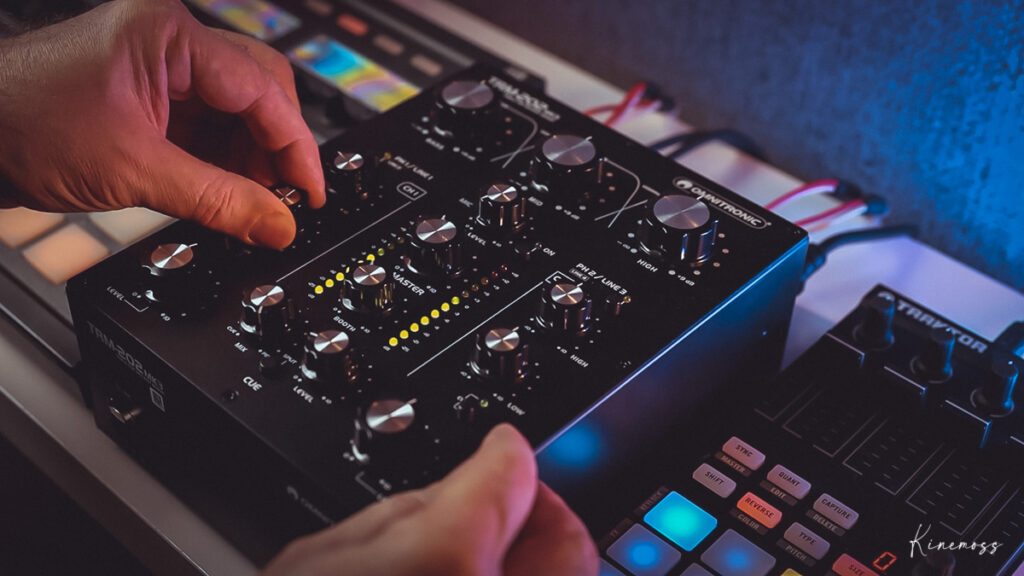
With Traktor, as TRM-202 MK3 is a fully analogue mixer, you’ll need an external multi-output audio interface. In my case that’s Native Instruments A6. From there, you just connect audio interface outputs to the line inputs on the mixer.
What I love about this setup is the hybrid approach it creates. I control Traktor with Maschine and F1 controllers and it handles track management, looping, and effects. But the actual mixing happens on the rotary mixer. So instead of mixing internally or with a controller, you’re physically blending the audio externally.
It forces you to engage more with the sound. And I’ve found that I use fewer visual cues in Traktor now. I’m not staring at the screen as much and I’m listening more carefully, making more deliberate transitions. It’s a subtle shift, but it changes your entire mindset as a DJ.
Conclusions
The Omnitronic TRM-202 MK3 isn’t trying to compete with high-end boutique rotary mixers, but it gives you the rotary mixer essentials: a solid build, smooth controls, and a warm analogue sound.
It’s a great starting point if you’re curious about rotary mixing, and it’s a refreshing alternative if you’re feeling stuck in a purely digital workflow and every time I used it during my sets it put a smile on my face.
All in all I can highly recommend this mixer to anyone looking to get into rotary mixers as I think it offers exceptional value for the money.
That’s all from me for today. If you enjoyed this review, please share it and consider subscribing to my YouTube channel. I’ll see catch you in the next one. Goodbye!